Chimney Parging on a 1930s Home Done Right
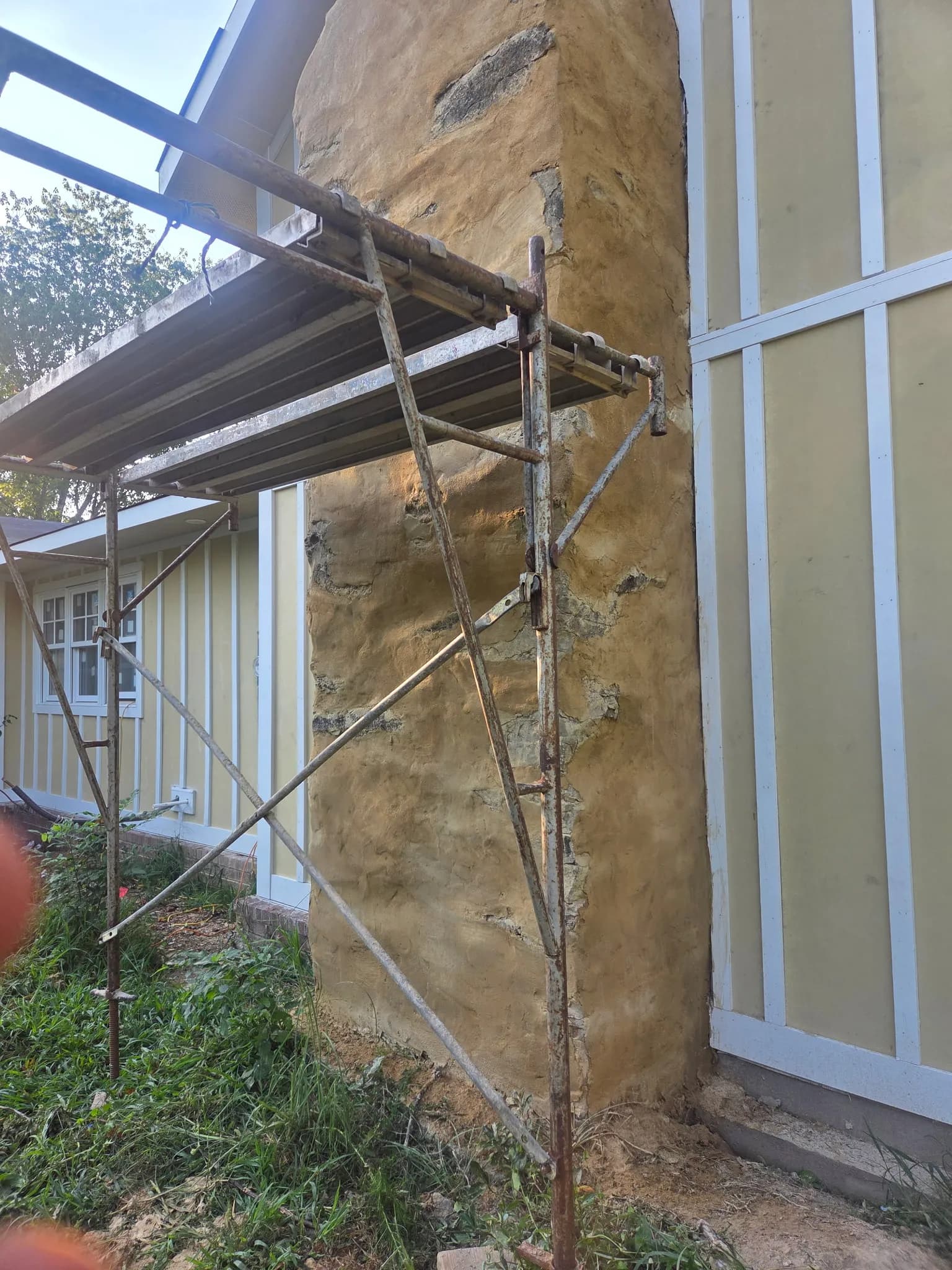
Older homes come with a lot of character - and a lot of masonry that has taken decades of weather. Chimneys on homes from the 1930s were built to last, but the mortar and parging coat that protects the underlying structure doesn't last forever. When it starts to crack, flake, or pull away, water gets in. And water in old masonry is a problem that compounds fast.
That's exactly what we were working with here. This chimney had significant parging loss across most of its exterior face, leaving the original stone and brick exposed to the elements. Scaffolding went up so we could work the full height of the chimney properly - no shortcuts, no rushing. Good parging work requires solid prep and the right mortar mix applied in controlled layers.
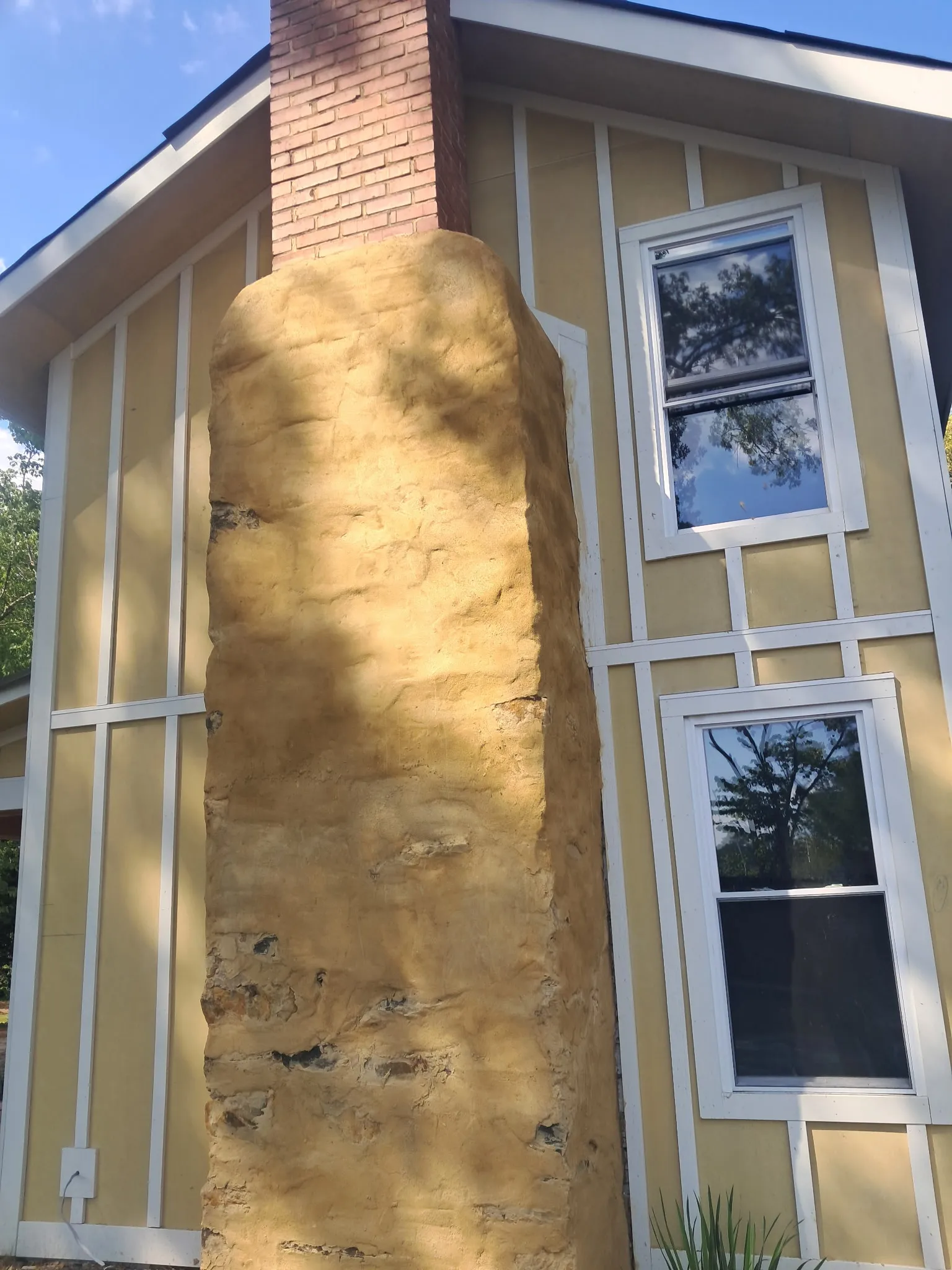
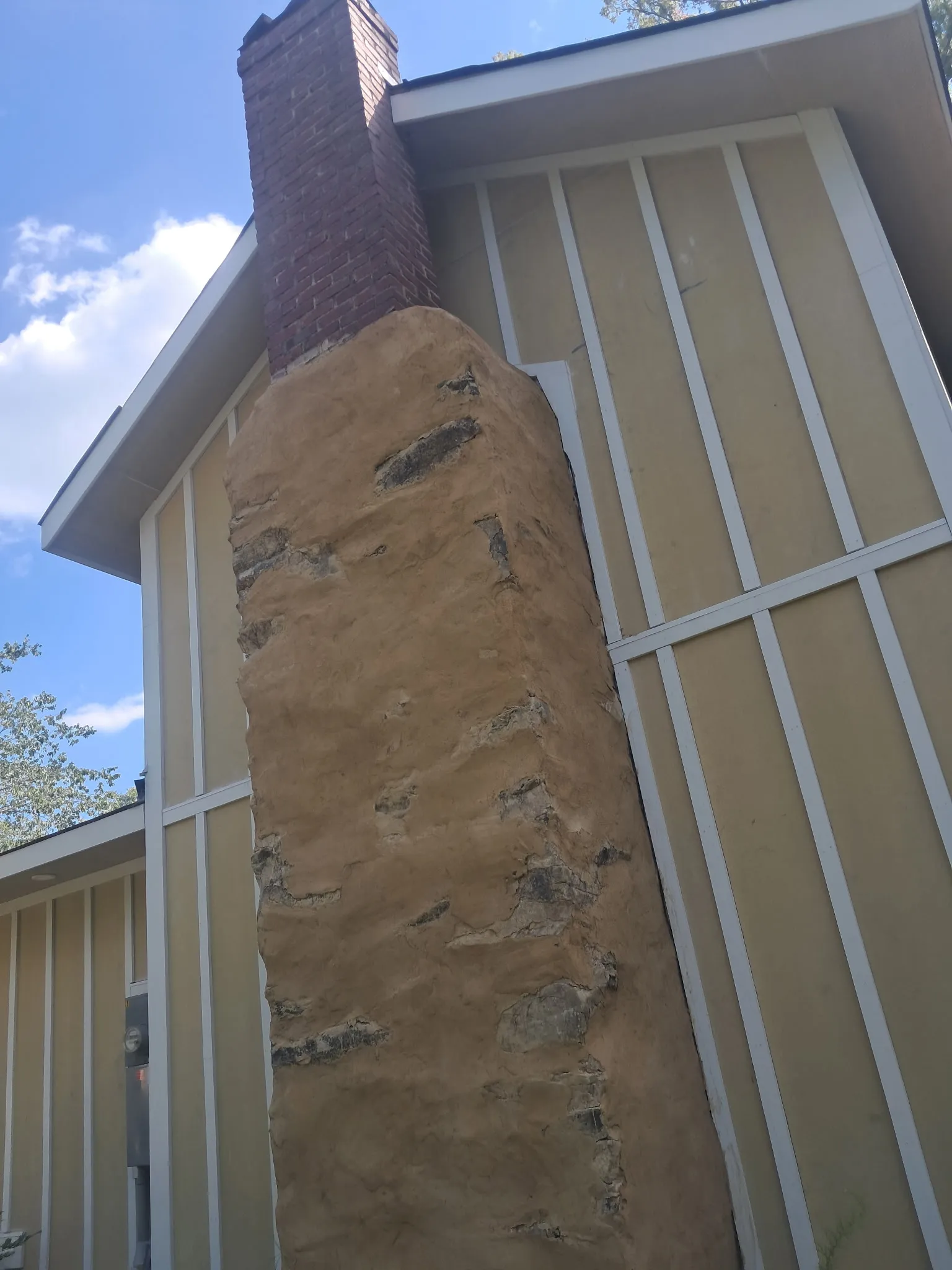
Parging is essentially a protective skin over the masonry. It seals out moisture, stabilizes loose material, and - on a home like this - keeps the look consistent with the era it was built in. The goal is never to make it look brand new. It's to make it look right, while actually doing its job structurally.
What we ended up with is a chimney that holds its character while being properly sealed. The texture and tone blend naturally with the original stone beneath, and the vulnerable areas that were letting in moisture are now covered and protected. That's the kind of repair that buys a homeowner years of confidence instead of years of worry.
If you've got a chimney on an older home that's showing wear - cracking, spalling, or parging that's starting to let go - getting eyes on it sooner rather than later is always the smarter move. Small masonry issues don't stay small.