Do I Need to Gut My Bathroom for a Rotten Subfloor?
Wondering if you really need to gut your whole bathroom for a rotten subfloor? Learn when full tear-out is necessary, repair options, and how the process works.
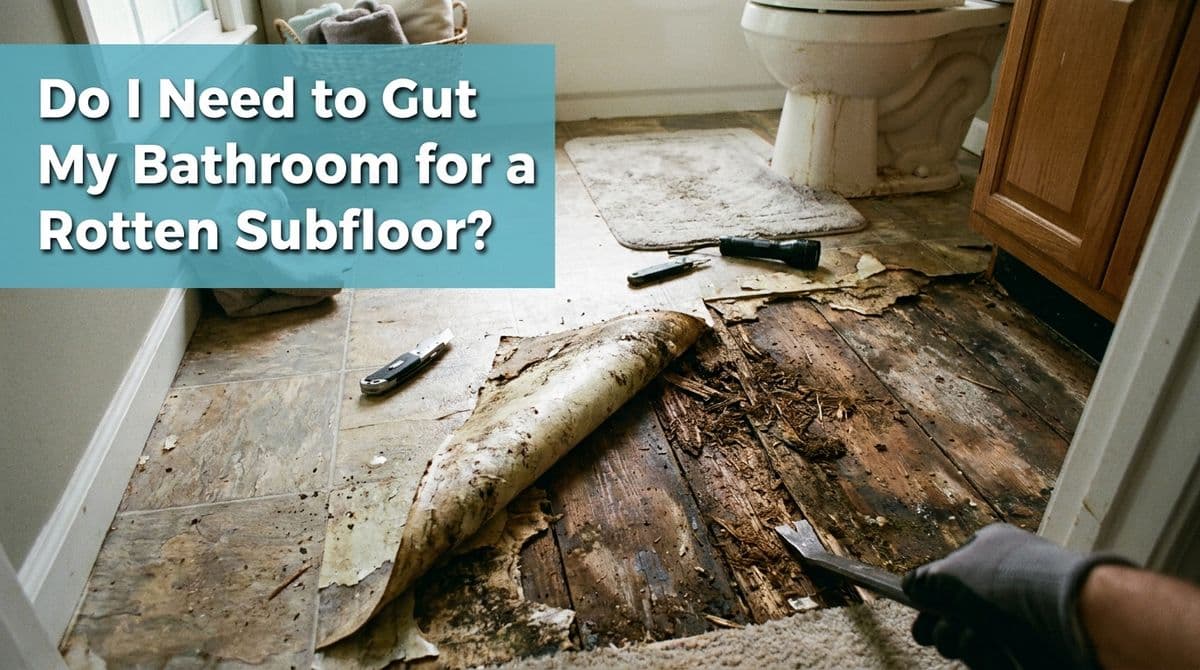
“Do I Really Have to Gut My Bathroom?”
We recently got a call from a homeowner — let’s call her Sarah — with a question we hear a lot: “Two different companies told me I have to remove my entire bathroom to replace a rotten subfloor. Do I really have to tear everything out?”
Sarah had done everything right. When she bought her 1970s home, she hired a structural engineer. The report showed old leak damage under both bathrooms: sagging, rotted subfloor and joists that needed sistering and reinforcement. No active leaks now, but the damage was still there.
Her crawl space contractors reviewed the report and said they could fix the structure — but only after the bathrooms were stripped down so the damaged subfloor could be completely removed. That’s when she called us to ask if that level of demolition was really necessary.
Why Bathroom Subfloors Rot in the First Place
The first thing we walked Sarah through was why this happens so often in bathrooms, especially in older homes:
- Past leaks from tubs, showers, or toilets that went unnoticed
- Failed caulking around tubs and showers letting water creep under the flooring
- Old plumbing that leaked slowly over years
- Moisture from below in damp crawl spaces
Even when the leak is fixed, the subfloor doesn’t magically heal. Once wood has been wet long enough to rot, it loses its strength for good.
Signs Your Bathroom Subfloor May Be in Trouble
You won’t always see dramatic damage from above. With Sarah, the real warning came from the engineer’s crawl space inspection, but homeowners can often spot clues inside the bathroom:
- A spongy or bouncy feel when you walk on the floor
- Cracked or loose tile, especially around the tub or toilet
- A toilet that rocks or won’t stay tight at the base
- Visible dips or humps in vinyl or laminate
- Persistent musty odor that cleaning doesn’t solve
If you’re seeing more than one of these, it’s worth getting a professional evaluation, especially in an older home.
Do You Always Have to Tear Everything Out?
Here’s the heart of Sarah’s question — and probably yours too. The honest answer: not always, but often.
Rotten subfloor under critical fixtures (toilets, tubs, showers) usually can’t be properly replaced from below. To safely remove and rebuild the structure, we need clear access from above. That often means:
- Removing flooring (tile, vinyl, etc.)
- Pulling the toilet
- Disconnecting and moving the tub or shower in bad areas
In some homes with very minor damage at the edges, we can open up just a portion of the floor. But in bathrooms like Sarah’s, where both the engineer and the foundation companies agreed there was widespread rot, a full tear-out of the finished surfaces in the affected areas is usually the safest, most cost-effective long-term fix.
Why We’re Cautious About “Just Patching the Bad Spot”
Sarah asked the same follow-up we often hear: “Can’t you just fix the soft area and leave the tub and most of the tile?” We’re always open to options, but there are risks:
- Rot spreads: What looks like a small soft spot can extend much farther once we open the floor.
- Hidden damage: Joists may be notched, cracked, or decayed where you can’t see them.
- Code and safety: Flooring and tile rely on a solid, continuous base. Patching over weak structure can lead to failure later.
We explained to Sarah that, especially around tubs and toilets, “good enough for now” patches often cost more in the long run when they have to be ripped out and redone.
What a Proper Bathroom Subfloor Repair Involves
For a typical project like Sarah’s, here’s what we walk homeowners through so they know what to expect:
- On-site evaluation: We inspect from both the bathroom and the crawl space, review any engineer’s report, and listen to your goals (minimal repair vs. full refresh).
- Planning & estimating: We lay out what needs to come out, how we’ll support fixtures, and how we’ll rebuild. Then we provide a detailed estimate you can adjust before work begins.
- Careful demolition: Flooring, baseboards, and affected walls are removed. Toilets and tubs are disconnected and pulled as needed, with plumbing capped safely.
- Structural repair: Rotten subfloor is cut out. Damaged joists are sistered (reinforced with new lumber) or replaced per engineering recommendations.
- New subfloor installation: We install fresh, properly fastened subfloor panels, glued and screwed for strength and squeak reduction.
- Rebuild & finishes: Plumbing is reset, fixtures reinstalled or upgraded, and new flooring, tile, and trim are installed.
By the time we’re done, the structure you can’t see is as solid as the new finishes you can.
How to Work with Your Engineer and Contractors
One thing Sarah did very well was keeping her engineer’s report and sharing it with everyone. That saved time and guesswork. If you’re facing a similar project, here’s how to stay in control:
- Keep all reports: Structural engineer notes, past repair invoices, and photos are all useful.
- Ask about sequence: Who repairs joists? Who replaces subfloor? Who handles plumbing and finishes? Make sure roles are clear.
- Get a detailed scope: Your estimate should spell out what’s being removed, what’s being replaced, and how the structure will be reinforced.
- Plan for finishes: If the floor is coming up anyway, it’s often a good time to refresh tile, fixtures, or layout.
When It Makes Sense to Be Proactive
Sarah wasn’t dealing with an active leak or a collapsing floor — she just didn’t want to wait until it became an emergency. That’s smart. If you’ve got a 40–50+ year old home with known past leaks, getting ahead of subfloor issues can:
- Protect the rest of your structure from further damage
- Prevent sudden failures around toilets and tubs
- Give you a chance to modernize a dated bathroom
- Make the home safer and more appealing if you ever sell
Our goal with homeowners like Sarah isn’t to scare anyone into a full gut remodel they don’t need. It’s to give clear options, explain the structural realities, and help you invest where it actually matters.
Not Sure How Bad Your Bathroom Subfloor Is?
If you’re seeing sagging floors, cracked tile, or you’ve got an engineer’s report mentioning rot or sistering joists, you don’t have to figure it out alone. We’re happy to come out, take a look, review your reports, and talk through whether you really need to open up the whole bathroom — or if there’s a more targeted way to get you safely back on solid ground.